
Wait, What?
Diagnosis of Miscommunication
“Sometimes we’re saying the same thing… or almost the same thing… but it doesn’t feel like it.”
Miscommunication is the invisible villain of most human interactions. Often what feels like conflict is a simple mismatch of frames, priorities, or starting points. By diagnosing it as miscommunication, you give yourself and others the chance to step back, notice what’s actually happening, and reduce the tension.
Nested Thoughts: When two statements overlap but diverge in emphasis or sequence, that’s nesting. Observing this is not judgment; it’s an operational tool for clarity.
Practical Note: If no resolution emerges, acknowledging that you agree to disagree or taking a strategic exit is an entirely valid outcome. Remember: understanding doesn’t always require agreement.
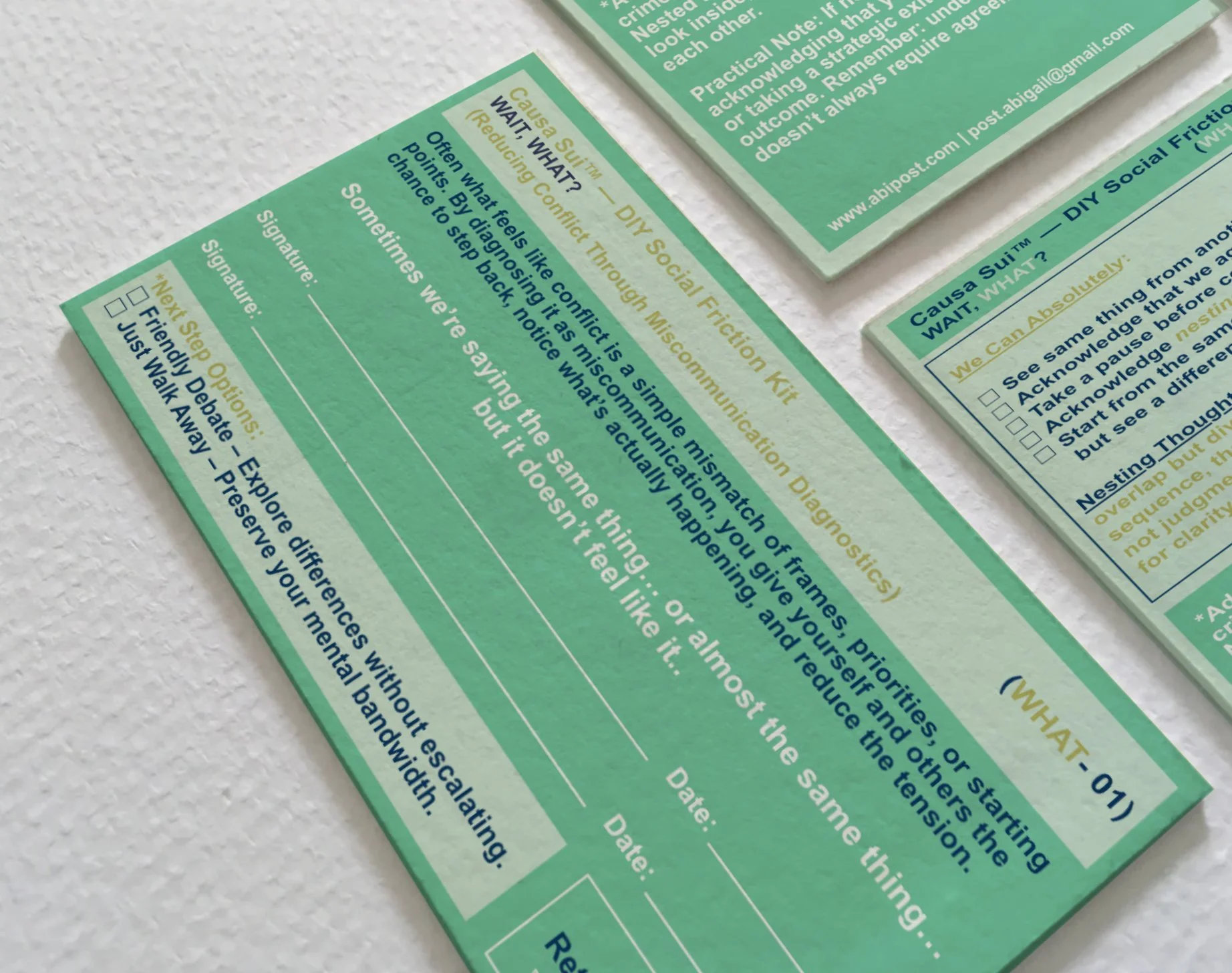
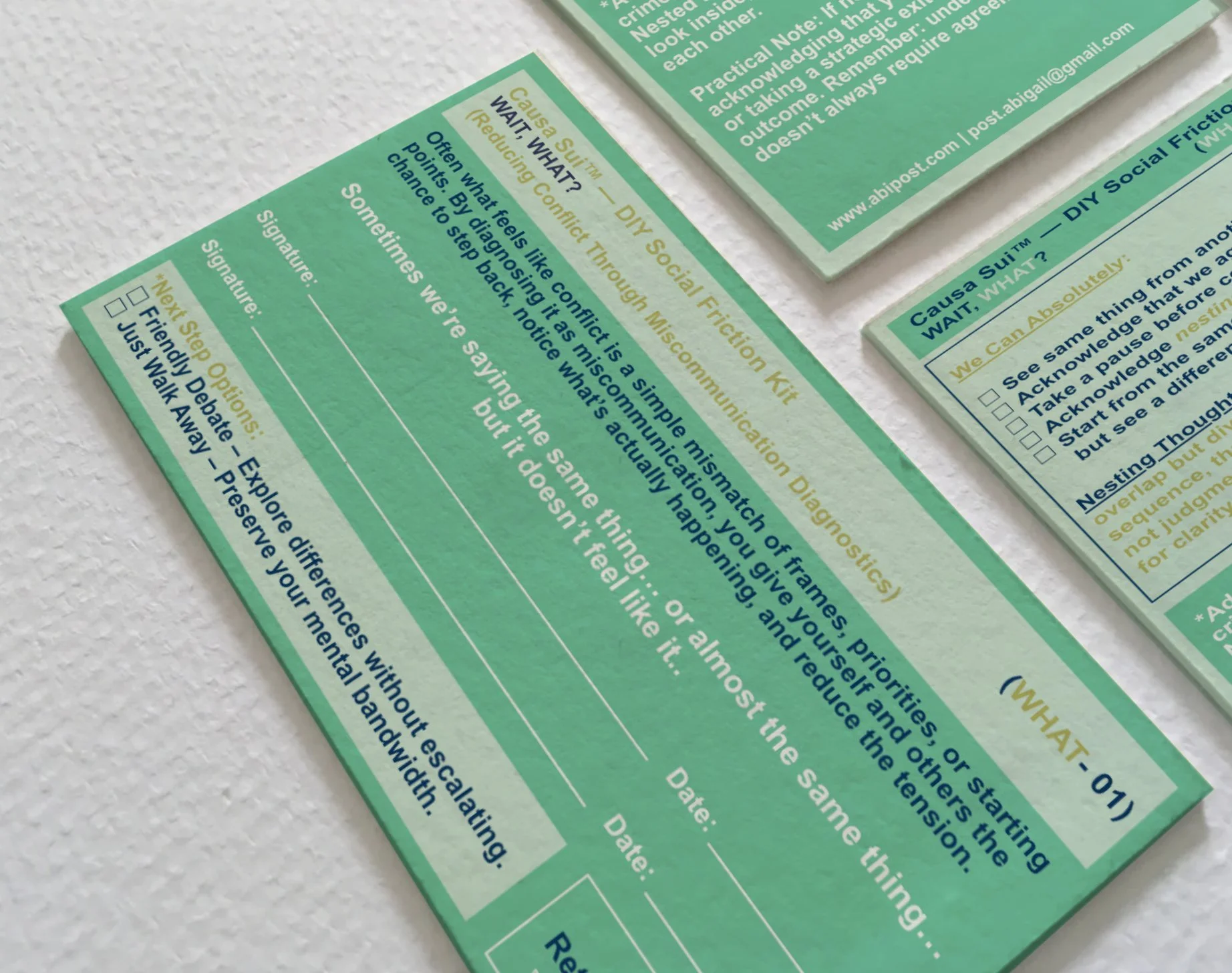
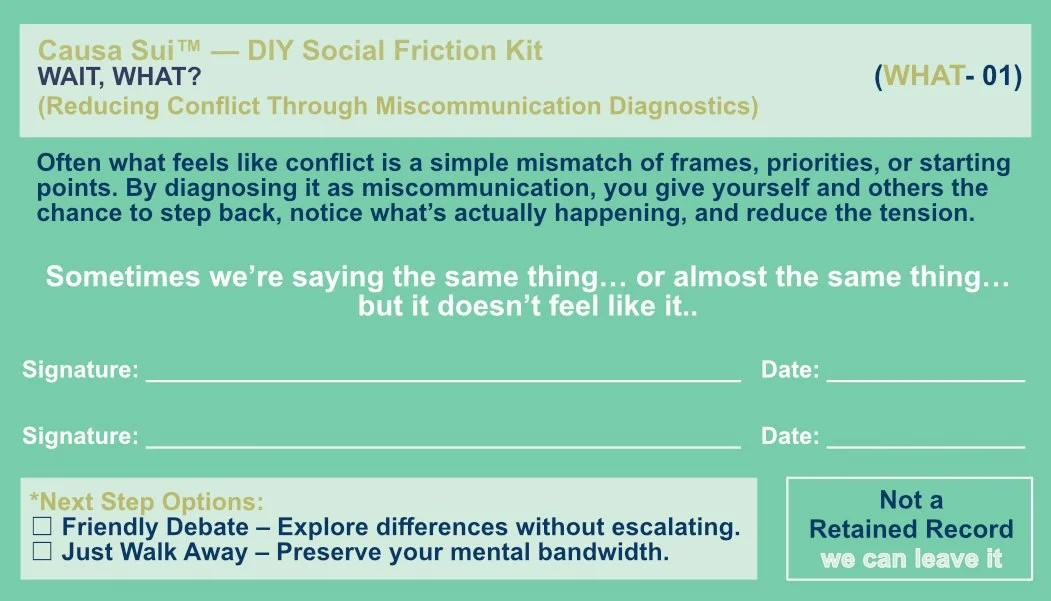
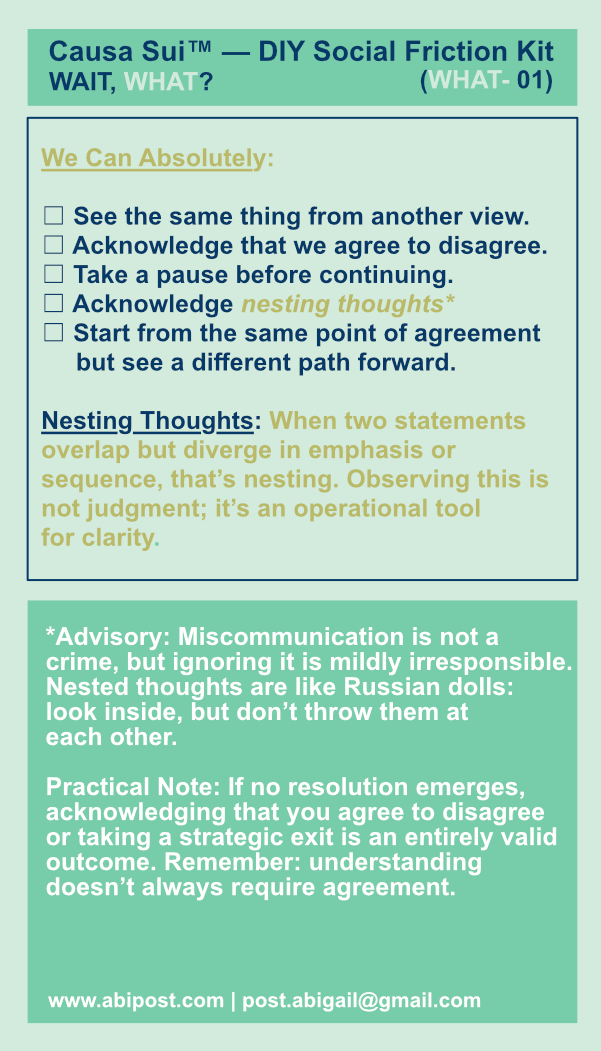
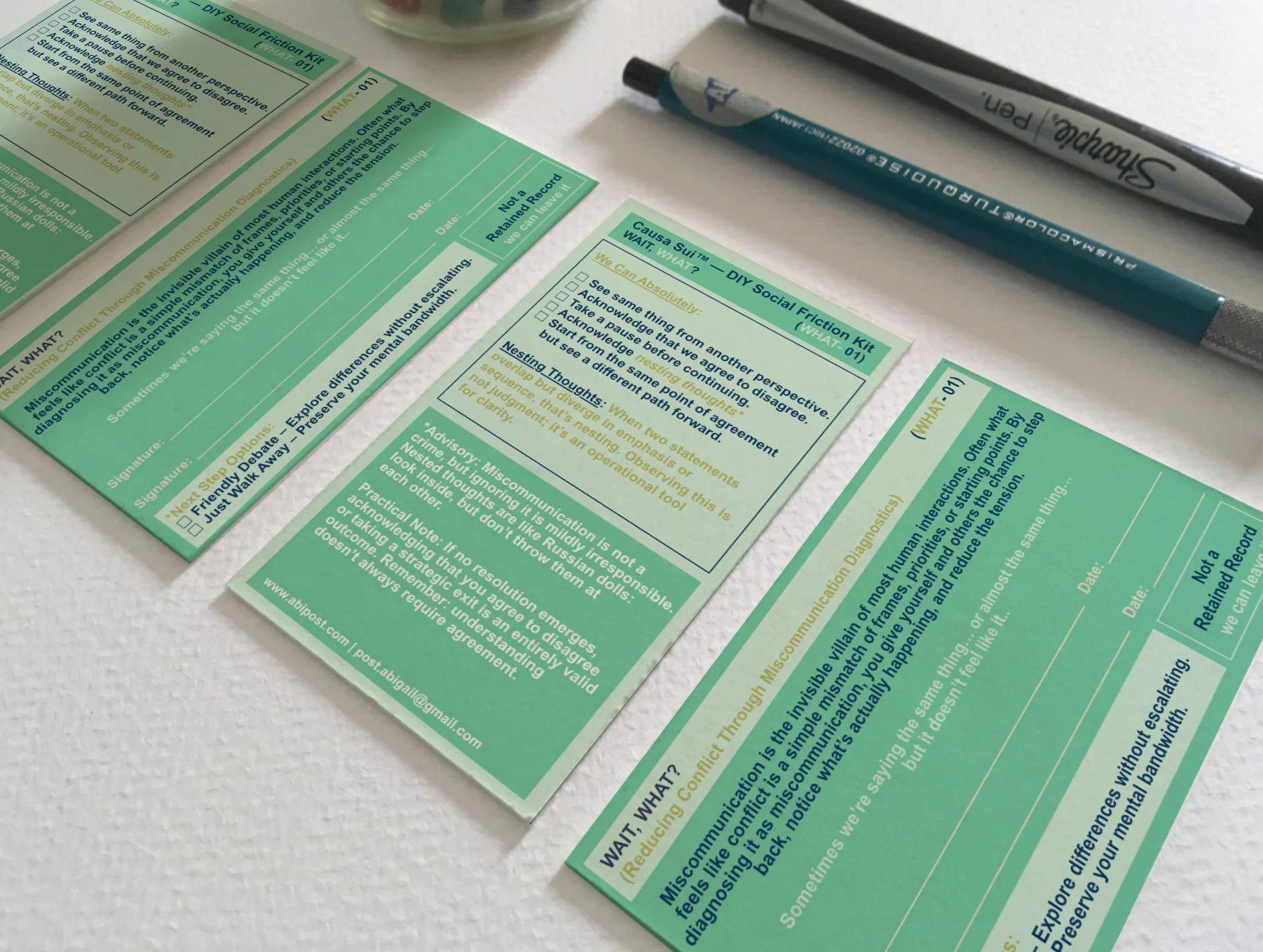
“Wait, What?” emerges from the observation that human conflict is often less about values and more about frames of reference. People rarely start from identical premises, and even when they do, their approaches, priorities, and interpretations diverge. This card provides a structured way to identify these misalignments, introducing the concept of nesting thoughts—ideas that exist in overlapping or parallel layers—so that participants can step back, recognize common ground, and avoid unnecessary escalation. The card’s institutional facade, with checkboxes and advisories, offers a familiar structure while simultaneously breaking it down with humor, making the cognitive labor of conflict management more approachable.
In the larger context of this project, “Wait, What?” fits alongside other cards that negotiate everyday human challenges—apologies, asking for help, expressing preferences—transforming potentially fraught interactions into practical, playful engagement. By formalizing recognition of miscommunication, the card encourages empathy, awareness, and reflection, aligning with the project’s mission to reduce social friction while making the process fun and memorable.