Can I Help FEMA?
A proposed way for FEMA to communicate when people need information most.
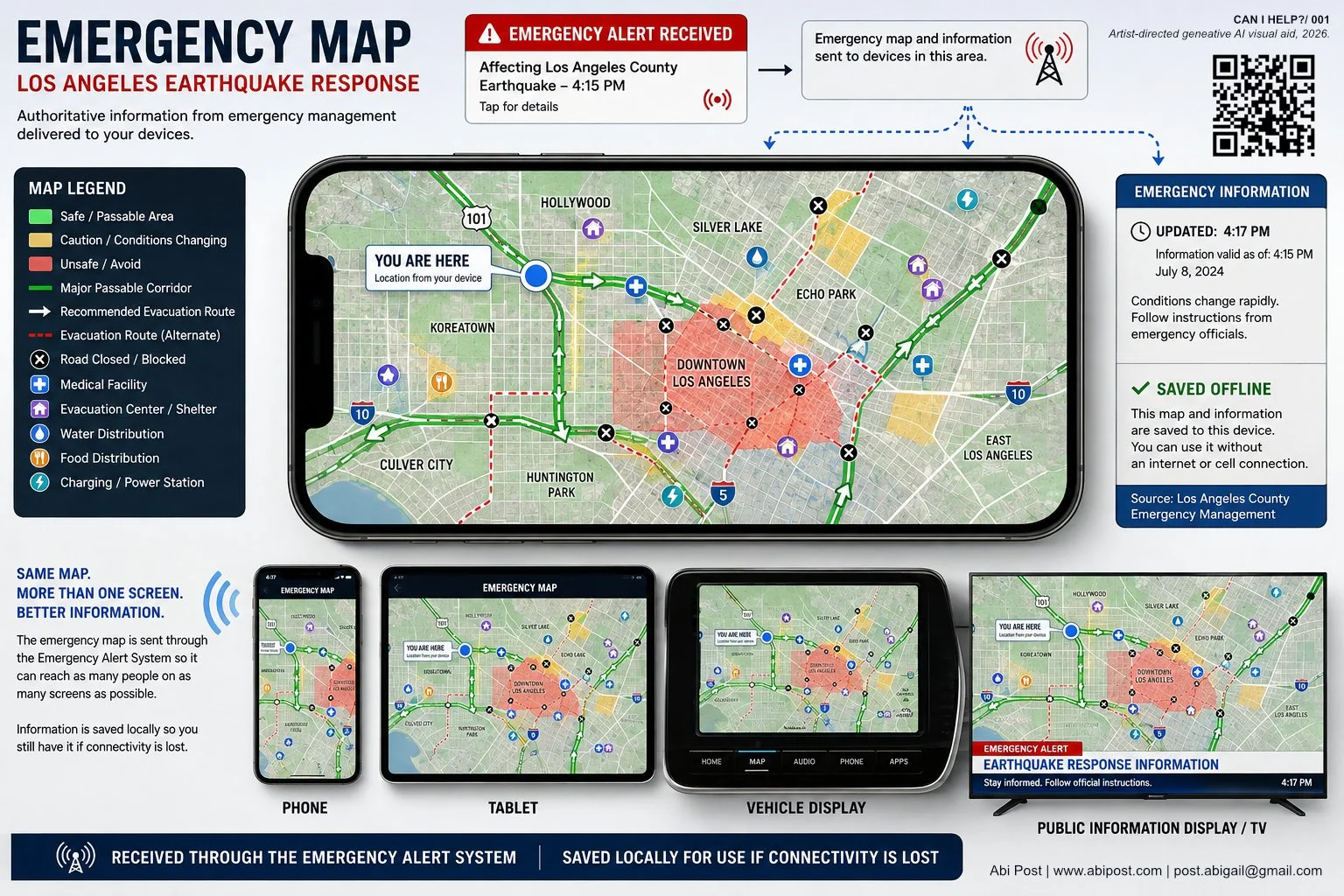
An idea for what FEMA needs to tell people in a disaster.
The question was “Modernization of the Nation’s Alerting Systems.” While writing indulgent fiction, we found ourselves asking: What would we want FEMA to tell us if we were in a disaster?
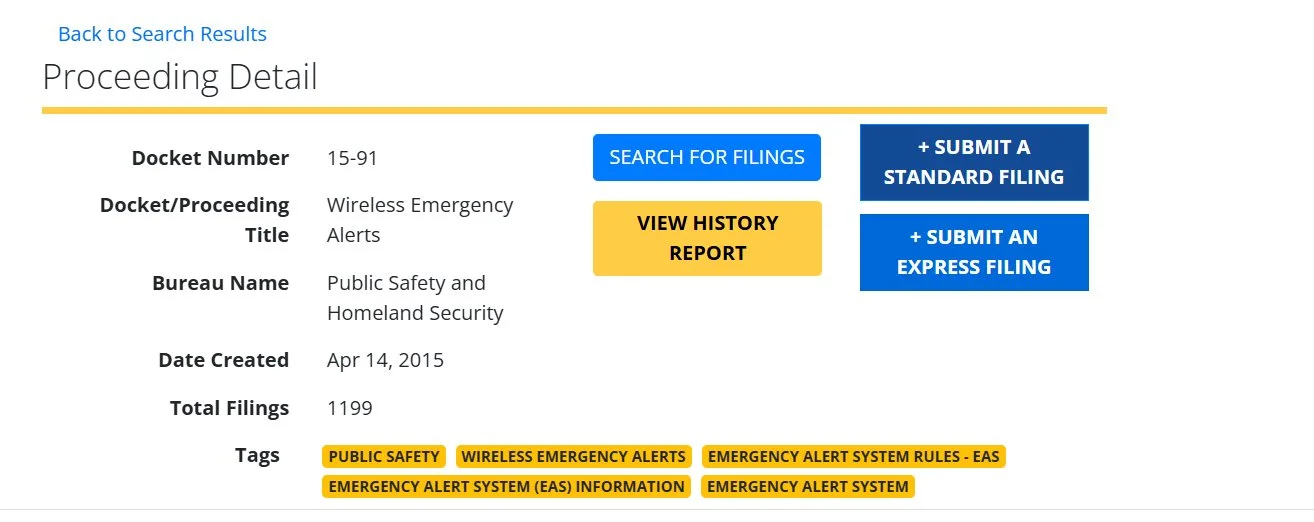
Then we discovered that the FCC was accepting public input on that very question, through PS Docket Nos. 15-94 and 25-224.
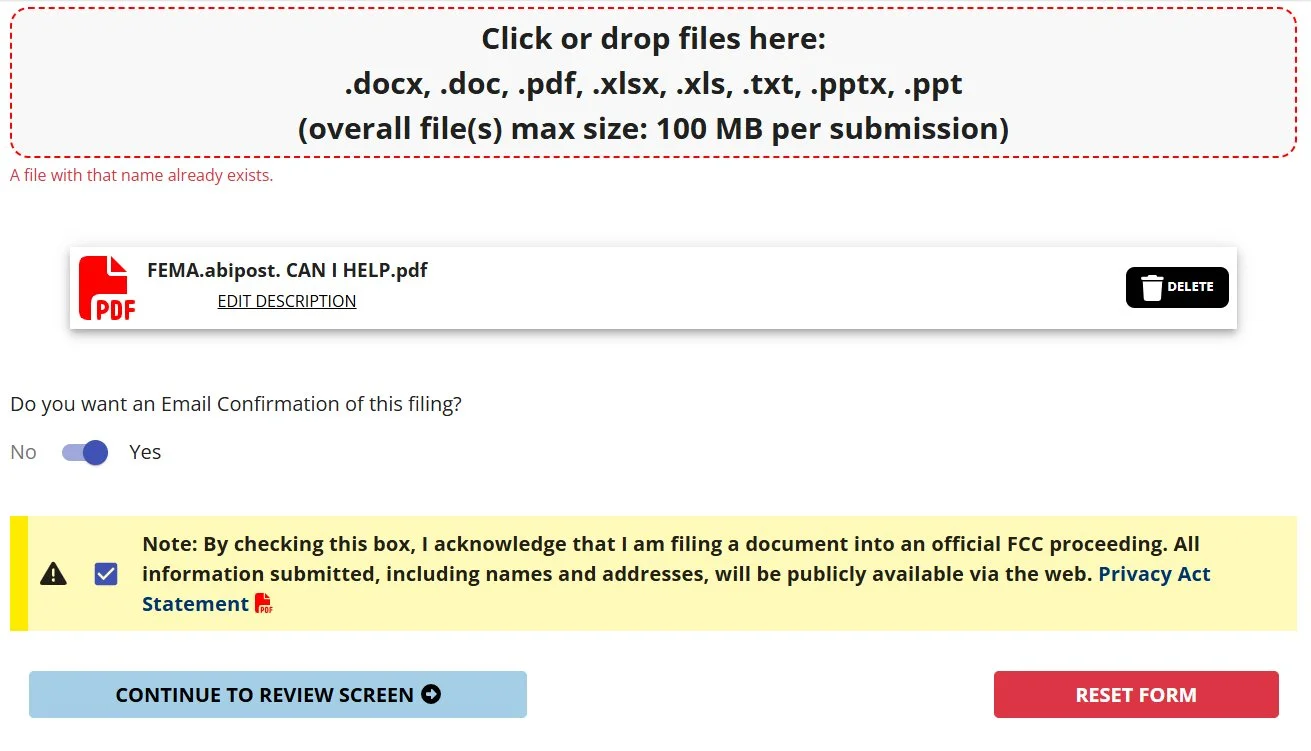
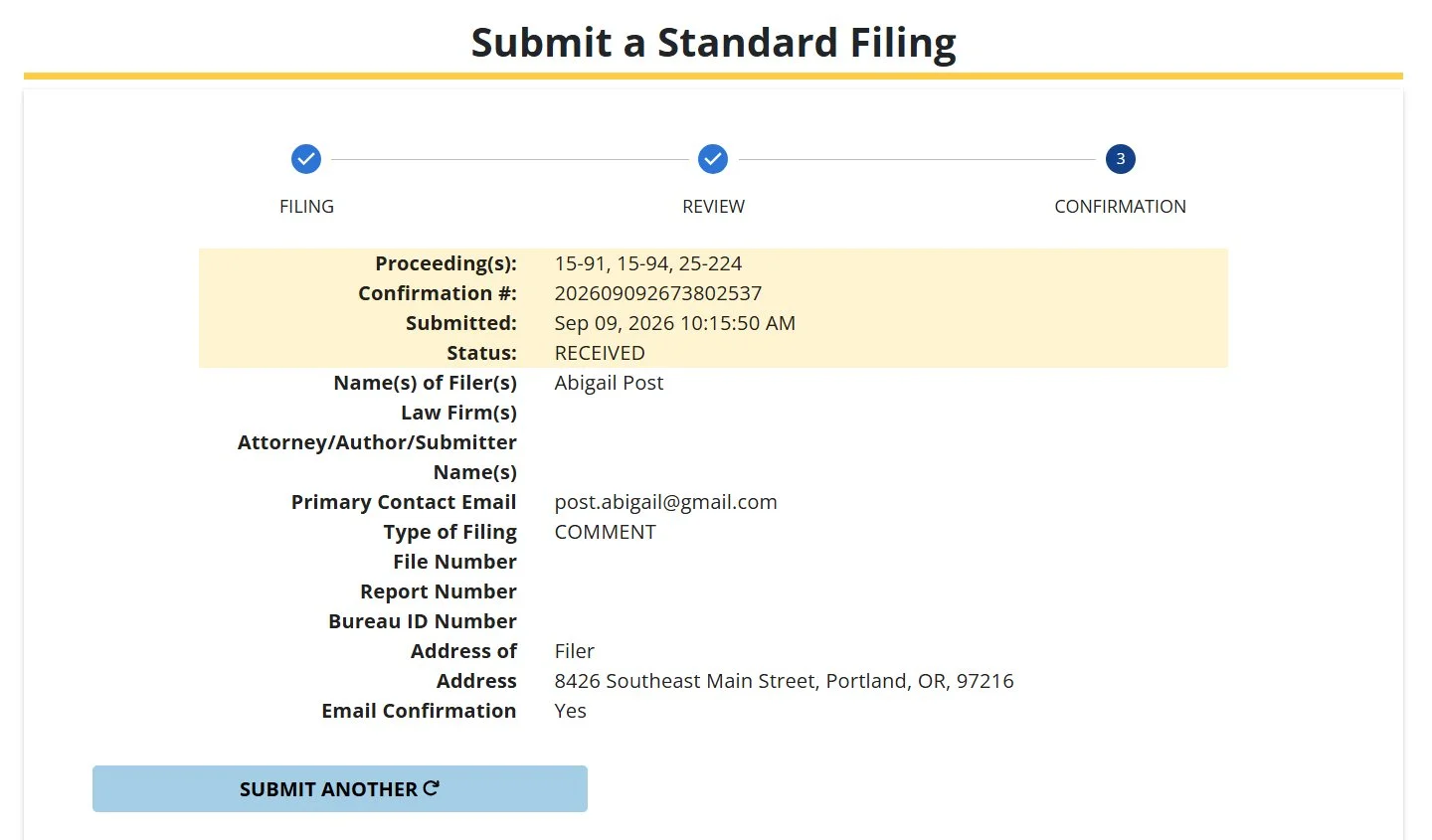
So we developed the idea and submitted it through the FCC Electronic Comment Filing System (ECFS) as a public comment.
Submitted September 2026. Reply comments close September 29, 2026.
The letter is as follows:
To the FEMA IPAWS team,
I am writing to share a feature concept for the existing Wireless Emergency Alert system. As a conceptual artist and designer, my work focuses on user experience. I have been considering how citizens interact with design constraints and technology during high-stress, critical moments. While I am not a hardware engineer, I wanted to submit an outside perspective on how we might leverage our existing data pipelines to fundamentally change human outcomes in a disaster.
The current system is very good at answering the first question in a disaster: “Is something happening, and am I in the affected area?”
I would like to see it go one step further:
When an emergency alert is issued, allow the alerting authority to provide a small, location-specific emergency information package that the receiving phone automatically saves locally.
For example, following an earthquake, that package could contain:
designated evacuation areas and routes
functioning emergency medical facilities
shelters and evacuation points
water and food distribution locations
road closures or areas to avoid
coordinates and basic directions
the time the information was issued and when it should be updated or considered expired
The critical feature is that the information would be saved to the device while connectivity is available. If cellular or Internet service subsequently fails, the person would still have the emergency information.
This could be especially valuable after earthquakes, hurricanes, wildfires, infrastructure failures, or other disasters in which communications become intermittent or disappear entirely.
The phone would not need to determine what is safe or generate emergency instructions. Those decisions would remain with authorized emergency-management agencies. The device would simply receive, store, and present authoritative information supplied through the existing emergency-alert infrastructure. Information would remain clearly associated with its issuing authority and timestamp so that users could distinguish current information from information that has expired or been superseded.
In other words:
Don’t just tell people that there is an emergency. Give their phones the information they will need when the network stops working.
I don’t know what technical, standards, security, or regulatory changes would be required to implement something like this, or whether some portion of the capability already exists. I am suggesting it from the perspective of an end user who sees a potential gap worth investigating.
This seems like a potentially useful extension of infrastructure that already exists, with meaningful consequences for people trying to navigate a disaster after communications have degraded.
Thank you for considering the idea.
I remain,
Abi Post
Below please find the confirmation of the comment being sent. It now lives in the FEDERAL RECORD.